What Should My Child Wear to Rhythmic Gymnastics Class?
- Victor Zhou
- 4 days ago
- 7 min read

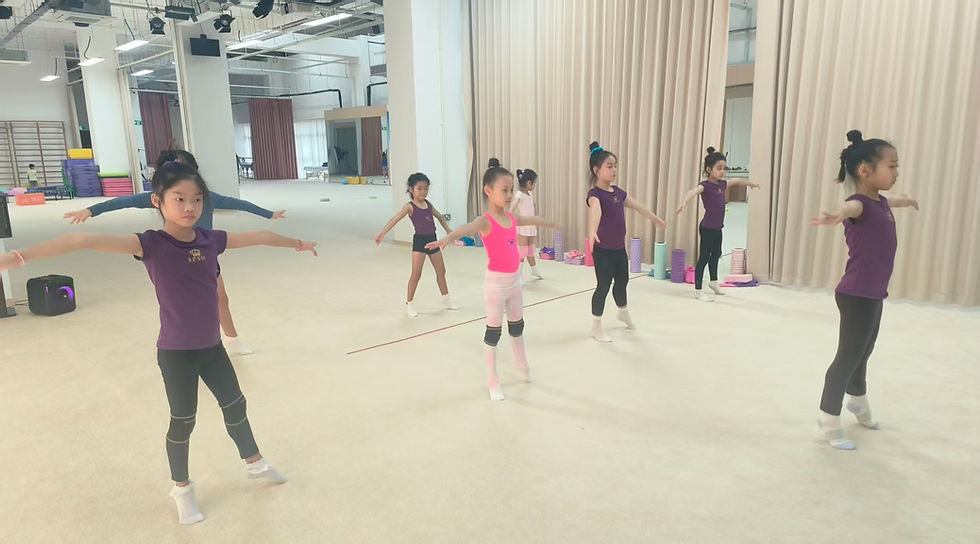
What Do Children Wear to Rhythmic Gymnastics?
For regular rhythmic gymnastics training, children generally wear fitted sportswear that allows them to move freely while enabling the coach to observe their posture and body alignment.
Suitable options include:
A gymnastics leotard
A fitted sports top or T-shirt
Leggings
Fitted shorts
Stretchable sportswear
Rhythmic gymnastics half shoes, if required by the coach
For a beginner or trial class, a fitted T-shirt or sports top with leggings is usually a practical starting point.
There is normally no reason to purchase an elaborate competition leotard before your child has even tried rhythmic gymnastics.
What Should My Child Wear to Their First Rhythmic Gymnastics Class?
For a child's first rhythmic gymnastics class, keep things simple.
A good beginner outfit could be:
Fitted sports top + leggings or fitted shorts
The clothing should allow your child to comfortably:
Stretch
Bend
Jump
Turn
Run
Balance
Perform basic gymnastics movements
Your child should be able to move without constantly adjusting their clothes.
This is especially important for younger beginners who may already be concentrating on following instructions, learning new movements and becoming comfortable in a new environment.
Does My Child Need a Leotard for the First Class?
Usually, no.
A leotard is commonly worn in rhythmic gymnastics because it is flexible, fitted and makes it easier for coaches to see a gymnast's body position.
However, beginners generally do not need to purchase one before attending their first lesson.
If your child enjoys rhythmic gymnastics and decides to continue training regularly, you can then ask the academy or coach about recommended training attire.
Why Should Rhythmic Gymnastics Clothes Be Fitted?
Loose clothing may be comfortable for everyday activities, but it is not always ideal for gymnastics.
Rhythmic gymnastics involves detailed body movements, including:
Posture
Leg extension
Arm positioning
Toe pointing
Balance
Flexibility
Body alignment
A coach needs to be able to see how the child's body is moving in order to provide accurate corrections.
For example, if a child is wearing a very oversized T-shirt, it may be difficult for the coach to clearly see the alignment of the back, hips and waist.
Fitted clothing therefore isn't simply about appearance. It can help coaches teach safer and more precise movement technique.
Should Children Wear Leggings or Shorts?
Both can be suitable.
Leggings
Leggings are a popular option because they are comfortable, flexible and provide good coverage during stretching.
They can be particularly convenient for beginner rhythmic gymnastics classes.
Fitted Shorts
Sports shorts can also work well, especially in Singapore's warm climate.
However, avoid shorts that are extremely loose or restrictive.
The most important factor is whether your child can move comfortably and safely.
Should My Child Wear Socks or Shoes for Rhythmic Gymnastics?
Rhythmic gymnastics is different from many other children's sports because gymnasts generally do not train in conventional sports shoes.
More experienced rhythmic gymnasts commonly wear rhythmic gymnastics half shoes, sometimes simply called toe shoes or half slippers.
These cover the front portion of the foot while leaving much of the heel exposed, allowing gymnasts to turn and move while maintaining contact with the floor.
For beginners, footwear requirements may depend on the academy and the type of lesson.
Before purchasing specialised rhythmic gymnastics shoes, it is best to check with your child's coach.
What Are Rhythmic Gymnastics Half Shoes?
If your child continues rhythmic gymnastics, you will probably hear coaches mention half shoes.
They are designed specifically for rhythmic gymnastics and are very different from ballet shoes or ordinary sports shoes.
Half shoes can help gymnasts perform:
Turns
Pivots
Balances
Jumps
Dance movements
They also protect the front of the foot during repeated training.
Beginners generally do not need to worry about buying professional footwear immediately. Your coach can recommend the appropriate type and size once your child begins regular training.
How Should My Child Wear Their Hair?
Long hair should generally be tied back securely.
A ponytail or bun may be suitable depending on the child's hair length and the academy's requirements.
Keeping hair away from the face helps children:
See clearly during movement
Concentrate on instructions
Avoid repeatedly fixing their hair
Perform turns and jumps more comfortably
For more advanced training and competitions, hairstyles may become more specific, but beginners simply need their hair to be neat and secure.
Should My Child Wear Jewellery?
It is generally better to remove jewellery before gymnastics training.
Avoid items such as:
Necklaces
Bracelets
Watches
Large earrings
Dangling accessories
These can become uncomfortable or create unnecessary safety risks when children are stretching, rolling, jumping or working with rhythmic gymnastics apparatus.
Simple is best.
What Should Children Avoid Wearing to Rhythmic Gymnastics?
Some clothing may make gymnastics training more difficult.
Try to avoid:
Oversized T-Shirts
Very loose shirts can interfere with movement and make it harder for coaches to observe posture.
Jeans
Jeans do not provide the flexibility required for gymnastics movements.
Dresses or Skirts
Unless specifically designed for gymnastics, everyday dresses and skirts are not appropriate training clothing.
Restrictive Clothing
Children need a wide range of movement during stretching, jumps and balances.
Clothing With Large Accessories
Avoid clothing with large zippers, buckles, decorative pieces or anything that may become uncomfortable during floor exercises.
Everyday Sports Shoes
Running shoes and sneakers are generally not used for normal rhythmic gymnastics training.
Does My Child Need a Competition Leotard?
Not for normal beginner training.
There is an important difference between a training leotard and a competition leotard.
Training leotards are generally simpler and designed for everyday practice.
Competition leotards can be much more elaborate, featuring decorative designs, crystals, colours and performance-specific details.
If your child is just starting recreational or beginner rhythmic gymnastics, there is no need to immediately invest in competition clothing.
Competition attire becomes relevant when a gymnast progresses into a competitive training pathway.
What Should My 3- to 5-Year-Old Wear to Rhythmic Gymnastics?
For young children attending beginner rhythmic gymnastics classes, comfort and simplicity are especially important.
A 3-, 4- or 5-year-old can usually start with:
A fitted top + comfortable leggings or fitted shorts
At this age, children are often developing fundamental skills such as:
Balance
Coordination
Body awareness
Flexibility
Rhythm
Listening and following instructions
Their clothing should help them move freely rather than becoming another thing they need to think about.
Parents should also choose clothing that is easy for the child to put on and remove.
What Should I Bring to My Child's Rhythmic Gymnastics Class?
Besides appropriate clothing, it can be useful to prepare a small training bag.
Consider bringing:
Water bottle
Hair ties
Small towel
Appropriate gymnastics footwear if required
Any equipment specifically requested by the coach
Beginners generally should not purchase hoops, balls, ribbons, clubs or ropes before speaking with their coach.
The appropriate apparatus can depend on the child's age, height and training level.
Does My Child Need to Bring Their Own Ribbon or Hoop?
Usually not for a first class.
Rhythmic gymnastics uses five main apparatus:
Rope, hoop, ball, clubs and ribbon.
However, beginners do not necessarily start using all five immediately.
Young gymnasts first need to develop basic physical foundations such as coordination, balance, flexibility and body control. Apparatus skills can then be introduced progressively.
Before purchasing equipment, ask your child's academy what is required.
This avoids buying apparatus that may be the wrong size or unsuitable for your child's training level.
What Should Parents Buy After Their Child Decides to Continue?
Once your child has attended several classes and wants to continue rhythmic gymnastics, speak with the coach before purchasing specialised equipment.
Depending on the programme, your child may eventually need:
Training leotard
Rhythmic gymnastics half shoes
Appropriate apparatus
Training bag
Competition attire if entering competitions
There is no need to buy everything at once.
A good rhythmic gymnastics programme should introduce equipment according to the gymnast's age, ability and development stage.
Beginner Rhythmic Gymnastics Classes in Singapore
If your child is interested in rhythmic gymnastics, the best way to begin is often simply to experience a class.
At Angels Wing Academy (AWA), our rhythmic gymnastics programmes in Singapore are designed to help children progress step by step, from their first introduction to the sport through more advanced development and competitive training.
For beginners, training focuses on building important foundations including:
Flexibility
Coordination
Balance
Posture
Strength
Body control
Musicality
Confidence
Fundamental rhythmic gymnastics technique
Children can gradually progress as their skills and interest develop.
Parents do not need to prepare professional competition clothing or purchase a complete set of apparatus before getting started.
For a first lesson, comfortable fitted sportswear is a good place to begin.
Book a Rhythmic Gymnastics Trial Class in Singapore
Still wondering whether rhythmic gymnastics is suitable for your child?
A trial class can help you understand much more than simply watching videos or reading about the sport.
Your child can experience the training environment, meet the coach, try basic rhythmic gymnastics movements and begin exploring the sport in person.
Parents can also speak with the coaching team about appropriate training clothes, footwear and equipment before purchasing specialised items.
Book a rhythmic gymnastics trial class with Angels Wing Academy in Singapore and let your child experience rhythmic gymnastics for themselves.
Frequently Asked Questions
What should a beginner wear to rhythmic gymnastics?
Beginners can usually wear a fitted sports top with leggings or fitted shorts. A professional competition leotard is generally unnecessary for a first class.
Does my child need a leotard for rhythmic gymnastics?
Not necessarily for a trial or beginner class. If your child continues regular training, the academy may recommend a suitable training leotard.
Can my child wear leggings to rhythmic gymnastics?
Yes. Comfortable, stretchable and fitted leggings are a practical choice for many beginner classes.
Can my child wear a T-shirt to rhythmic gymnastics?
A fitted T-shirt is generally more suitable than an oversized one because it allows the coach to see the child's posture and body alignment more clearly.
Do rhythmic gymnasts wear shoes?
Rhythmic gymnasts commonly use specialised half shoes rather than conventional sports shoes. Beginners should check with their coach before purchasing them.
Should my child bring a ribbon to the first rhythmic gymnastics class?
Usually not unless the academy specifically asks you to. It is better to check with the coach before purchasing rhythmic gymnastics apparatus.
What should a 4-year-old wear to gymnastics?
For beginner rhythmic gymnastics, a fitted top with leggings or comfortable fitted shorts is generally a simple option. Clothing should allow the child to stretch, jump and move freely.
Where can my child try rhythmic gymnastics in Singapore?
Angels Wing Academy offers rhythmic gymnastics programmes in Singapore for children at different stages, including beginners who are experiencing the sport for the first time.
Final Thoughts
So, what should your child wear to rhythmic gymnastics class?
For most beginners, the answer is straightforward:
Comfortable, fitted and flexible sportswear.
You do not need to purchase an expensive competition leotard, professional apparatus and specialised accessories before your child's first lesson.
Start simple, let your child experience rhythmic gymnastics, and then speak with the coach about the appropriate clothing and equipment as they progress.
For families looking for rhythmic gymnastics classes for beginners in Singapore, Angels Wing Academy provides a structured pathway where children can develop from their first movements toward more advanced rhythmic gymnastics skills.


Comments