Rhythmic Gymnastics Benefits: 10 Reasons Parents in Singapore Choose Rhythmic Gymnastics
- Victor Zhou
- Jun 28
- 4 min read


Why Rhythmic Gymnastics Is One of the Best Sports for Children's Physical and Personal Development
As parents, we all want our children to grow up healthy, confident, and happy.
When choosing an extracurricular activity, many families ask:
Is rhythmic gymnastics good for children?
What are the benefits of rhythmic gymnastics?
Will rhythmic gymnastics help my child's development?
Is rhythmic gymnastics only for competitions?
The answer is simple.
Rhythmic gymnastics is much more than a competitive sport.
It is one of the most comprehensive activities for developing children's physical abilities, confidence, discipline, and creativity.
At AWA Singapore, we believe rhythmic gymnastics is not just about beautiful routines—it's about helping children build strong bodies, confident minds, and lifelong healthy habits.
What Is Rhythmic Gymnastics?
Rhythmic gymnastics combines:
Dance
Gymnastics
Music
Flexibility
Strength
Balance
Apparatus skills
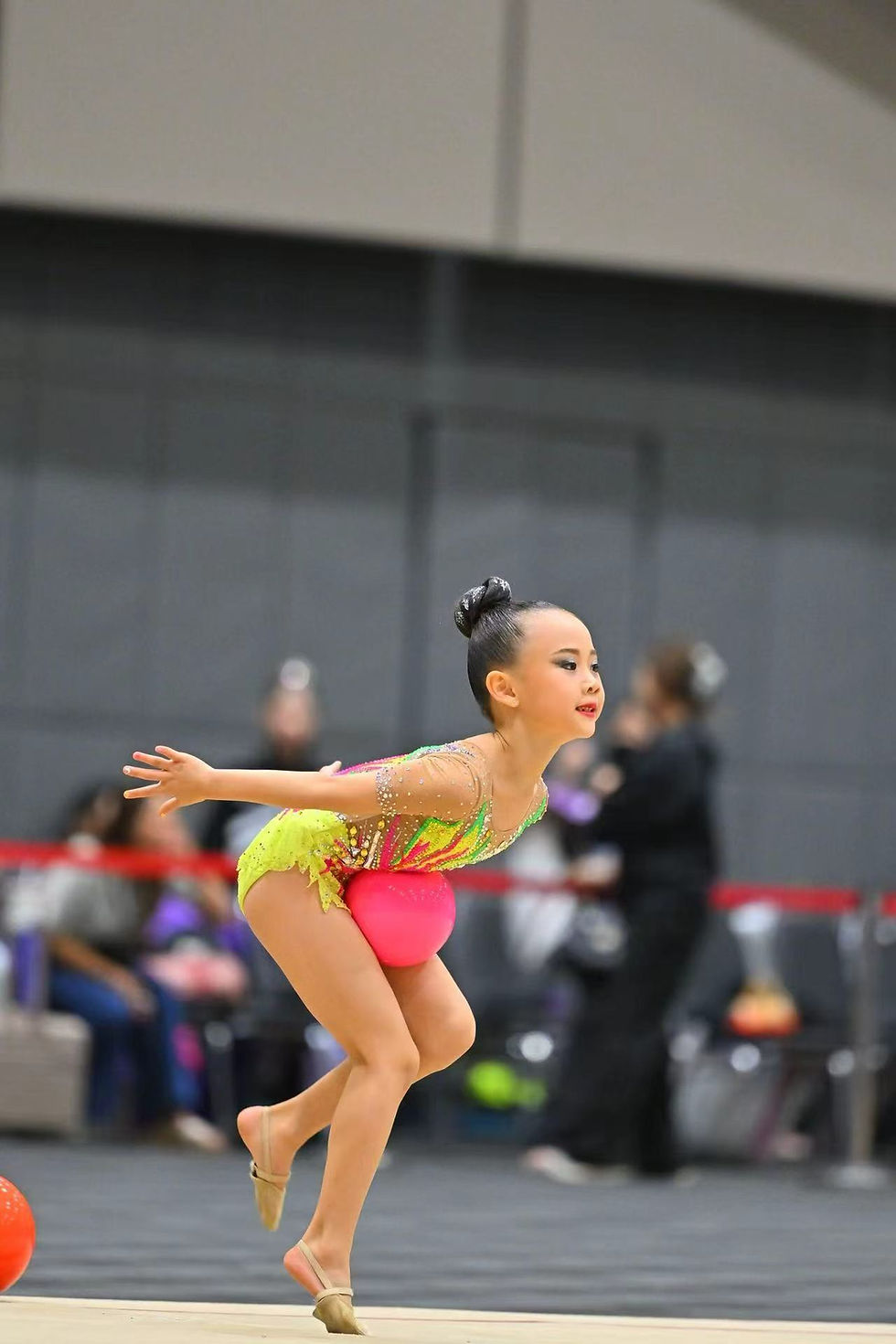
Children learn to perform with ribbon, hoop, ball, clubs, and rope while improving coordination and body control.
Unlike many sports that focus on a single physical skill, rhythmic gymnastics develops multiple areas of a child's growth at the same time.
1. Improves Flexibility Safely and Naturally
One of the most well-known benefits of rhythmic gymnastics is flexibility.
However, flexibility is not simply about performing splits.
Healthy flexibility helps children:
Move more comfortably
Improve posture
Reduce muscle stiffness
Increase mobility
Perform physical activities with greater confidence
At AWA, flexibility is developed gradually through age-appropriate training, ensuring every child progresses safely.
2. Builds Core Strength and Body Control
Behind every graceful movement is strong core stability.
Rhythmic gymnastics helps children develop:
Core strength
Balance
Stability
Body awareness
Controlled movement
These foundations support many other sports and everyday physical activities.
Strong body control also reduces the risk of injury as children grow.
3. Improves Posture and Body Alignment
Many children today spend hours sitting in school or using digital devices.
Poor posture has become increasingly common.
Rhythmic gymnastics encourages children to develop:
Upright posture
Better spinal alignment
Stronger back muscles
Greater body awareness
Parents often notice improvements in the way their children stand, walk, and move after several months of training.
4. Develops Coordination and Balance
Every rhythmic gymnastics routine requires multiple skills working together.
Children learn to coordinate:
Hands
Feet
Eyes
Music
Apparatus
This improves overall coordination while strengthening balance and movement efficiency.
These abilities also support success in many other sports.
5. Builds Confidence Through Achievement
Confidence isn't built by praise alone.
It grows through accomplishment.
Every new skill children learn becomes evidence that effort leads to improvement.
Whether it's:
Holding a balance longer
Mastering a ribbon movement
Completing a routine
Performing in front of others
Each success helps children believe in themselves.
6. Improves Focus and Self-Discipline
Rhythmic gymnastics teaches children to:
Listen carefully
Follow instructions
Practise consistently
Stay focused
Correct mistakes
These habits often transfer into school and everyday life.
Many parents notice improvements in concentration and responsibility after regular training.
7. Encourages Creativity and Artistic Expression
Unlike many sports, rhythmic gymnastics combines athletic performance with creativity.
Children learn to:
Move with music
Express emotions
Develop performance confidence
Interpret rhythm
Enjoy artistic movement
This unique combination helps children become both physically strong and creatively expressive.
8. Develops Emotional Resilience
Not every skill can be mastered immediately.
Children quickly discover that improvement requires:
Practice
Patience
Persistence
Positive thinking
As they overcome challenges, they develop resilience and a healthy attitude toward learning.
At AWA, we encourage children to see mistakes as opportunities to grow.
9. Creates Healthy Habits for Life
Regular rhythmic gymnastics training encourages children to:
Stay physically active
Develop healthy routines
Appreciate movement
Build lifelong fitness habits
These habits often continue well beyond childhood.
10. Supports Holistic Child Development
Perhaps the greatest benefit of rhythmic gymnastics is that it develops the whole child.
Children grow physically, emotionally, socially, and mentally.
Through every class, they develop:
Confidence
Discipline
Teamwork
Responsibility
Independence
Leadership
Respect for others
This is why many families view rhythmic gymnastics as an investment in lifelong development—not just a sport.
Why Families Choose AWA Singapore
At AWA Singapore, our philosophy goes beyond teaching gymnastics.
We focus on helping every child become stronger, healthier, and more confident.
Internationally Inspired Training
Our structured curriculum is based on international rhythmic gymnastics development principles.
Progressive Learning Pathways
Children can progress from beginner programmes to advanced and competitive squads at their own pace.
Child-Centred Coaching
Every child learns differently.
Our coaches provide personalised guidance in a warm and encouraging environment.
Strong Foundations First
Rather than rushing difficult skills, we prioritise posture, flexibility, coordination, and body control.
More Than Medals
Success is measured not only by competition results, but also by confidence, perseverance, and personal growth.
Frequently Asked Questions
Is rhythmic gymnastics good for beginners?
Yes. Most children begin with little or no experience.
Our beginner programmes focus on building confidence, coordination, and movement skills.
Does my child need to be naturally flexible?
No.
Flexibility develops gradually through proper coaching and regular practice.
Is rhythmic gymnastics only for girls?
Rhythmic gymnastics is traditionally more popular among girls, although some countries also offer programmes for boys.
How many classes should my child attend each week?
Most beginners start with one or two classes per week before progressing to more advanced training if they choose.
Discover the Benefits of Rhythmic Gymnastics at AWA Singapore
Whether your goal is to help your child become more confident, improve posture, develop flexibility, or simply enjoy movement, rhythmic gymnastics offers benefits that extend far beyond the gym.
At AWA Singapore, we combine professional coaching, structured development pathways, and a nurturing environment to help every child reach her full potential.
Book a Trial Class Today
Experience how rhythmic gymnastics can help your child build confidence, strength, flexibility, discipline, and a lifelong love of movement.
AWA SingaporeWhere Discipline Meets Warmth.


Comments