What Is FIG Rhythmic Gymnastics? A Parent's Guide to the World's Highest Standard of Rhythmic Gymnastics
- Victor Zhou
- 1 day ago
- 4 min read


What Is FIG Rhythmic Gymnastics?
Understanding the World's Highest Standard of Rhythmic Gymnastics
If you've been researching rhythmic gymnastics, you've probably come across the term FIG Rhythmic Gymnastics.
Many parents wonder:
What does FIG mean?
Is FIG Rhythmic Gymnastics only for elite athletes?
Does my child need to compete under FIG rules?
Can recreational students benefit from FIG coaching principles?
The short answer is:
FIG Rhythmic Gymnastics represents the highest international standard of the sport—but its training philosophy can benefit every child, not just future champions.
At AWA Singapore, we incorporate internationally recognised coaching principles inspired by FIG while creating enjoyable, child-friendly programmes designed for recreational learners.
What Does FIG Stand For?
FIG stands for the Fédération Internationale de Gymnastique, or the International Gymnastics Federation.
Founded in 1881, FIG is the world's oldest international sports federation and serves as the global governing body for gymnastics.
FIG oversees several gymnastics disciplines, including:
Rhythmic Gymnastics
Artistic Gymnastics
Trampoline Gymnastics
Aerobic Gymnastics
Acrobatic Gymnastics
Parkour
For rhythmic gymnastics, FIG establishes the international standards used in:
Olympic Games
World Championships
Continental Championships
International competitions
What Makes FIG Rhythmic Gymnastics Different?
FIG Rhythmic Gymnastics is recognised worldwide for combining:
Athletic performance
Artistic expression
Musical interpretation
Technical precision
Apparatus mastery
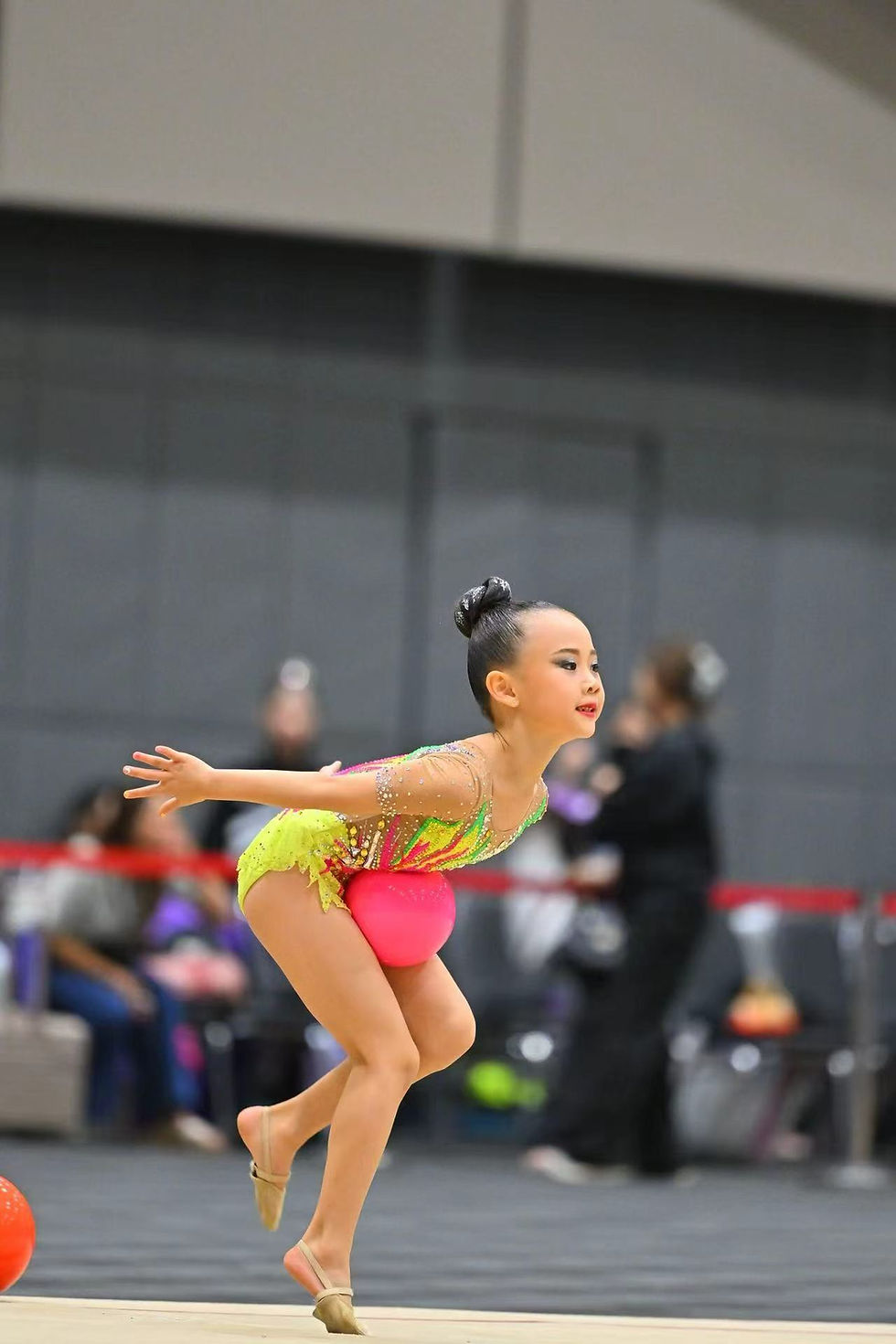
Gymnasts perform routines using five official apparatus:
Ribbon
Hoop
Ball
Clubs
Rope
Every routine combines flexibility, strength, coordination, balance, rhythm, and creativity into a beautifully choreographed performance.
FIG Is About More Than Difficult Skills
When parents watch international competitions, they often notice spectacular:
High leaps
Multiple pivots
Extreme flexibility
Apparatus throws
However, experienced coaches know that FIG gymnastics isn't simply about difficulty.
International judges evaluate many areas, including:
Body technique
Execution quality
Musicality
Artistic presentation
Apparatus handling
Precision
Body control
This means successful gymnasts must develop complete athletic ability—not just flexibility.
Strong Foundations Come First
One of the biggest lessons children can learn from FIG principles is that every elite gymnast begins with strong fundamentals.
Before athletes master advanced routines, they spend years developing:
Proper posture
Core strength
Balance
Flexibility
Coordination
Body awareness
Movement quality
At AWA Singapore, we follow this same philosophy.
We believe children should first learn how to move well before attempting advanced techniques.
FIG Principles Benefit Recreational Students Too
Many parents assume FIG training only applies to competitive athletes.
In reality, its development principles benefit children of all levels.
Professional coaching inspired by FIG encourages children to develop:
Healthy posture
Safe movement patterns
Proper technique
Strong coordination
Confidence
Body awareness
These qualities support both recreational participation and lifelong physical wellbeing.
Why Recreational Rhythmic Gymnastics Matters
Most children don't dream of becoming Olympians.
Instead, parents want activities that help children:
Stay active
Build confidence
Improve posture
Develop coordination
Learn discipline
Enjoy movement
Recreational rhythmic gymnastics provides these benefits while removing unnecessary competitive pressure.
At AWA Singapore, children are encouraged to progress at their own pace while learning through internationally inspired coaching methods.
More Than Medals
One of the greatest lessons FIG teaches is that success comes through consistent improvement.
Children gradually learn:
Patience
Discipline
Resilience
Focus
Responsibility
Confidence
These life skills remain valuable regardless of whether children ever compete.
For us, these qualities matter just as much as technical ability.
Why Parents Appreciate International Coaching
International coaching inspired by FIG focuses on long-term athlete development rather than short-term results.
Children learn in an environment that emphasises:
Safety
Correct technique
Progressive learning
Positive encouragement
Individual growth
This creates a healthier experience for young learners and supports lifelong enjoyment of physical activity.
Why Families Choose AWA Singapore
At AWA Singapore, we specialise in Recreational Rhythmic Gymnastics, combining internationally inspired coaching principles with a warm, child-centred approach.
Families choose AWA because we focus on developing children—not simply athletes.
International Coaching Standards
Our coaching philosophy reflects internationally recognised rhythmic gymnastics development principles while remaining suitable for beginners.
Strong Foundations
Children develop:
Posture
Strength
Flexibility
Coordination
Balance
Body awareness
before progressing to more advanced skills.
Child-Centred Learning
Every child develops differently.
We celebrate individual progress rather than comparison.
Holistic Development
Beyond gymnastics, children also develop:
Confidence
Creativity
Discipline
Focus
Emotional resilience
Teamwork
Because success should never be measured only by medals.
Frequently Asked Questions
What is FIG Rhythmic Gymnastics?
FIG Rhythmic Gymnastics refers to the international standards and competitions governed by the Fédération Internationale de Gymnastique (International Gymnastics Federation).
Does my child need to compete in FIG competitions?
No.
Most children participate recreationally while benefiting from internationally recognised coaching methods and development principles.
Is FIG Rhythmic Gymnastics suitable for beginners?
The official competition pathway is designed for trained athletes, but the same foundational principles—such as posture, coordination, flexibility, and proper technique—are excellent for beginners when taught in an age-appropriate way.
What is the difference between FIG training and recreational gymnastics?
FIG competition follows strict international rules and judging criteria. Recreational rhythmic gymnastics focuses on confidence, healthy movement, enjoyment, and personal development while drawing inspiration from professional coaching standards.
Every Great Gymnast Starts with Strong Foundations
Olympic performances may inspire children.
But every elite gymnast began exactly the same way:
By learning how to stand correctly.
How to balance.
How to move with confidence.
How to enjoy the process of learning.
At AWA Singapore, we believe these first steps are the most important ones.
Our goal isn't simply to prepare children for competition.
It's to help them develop healthy bodies, confident minds, and a lifelong love of movement through internationally inspired rhythmic gymnastics education.
Book a Trial Class Today
Looking for rhythmic gymnastics classes in Singapore that combine international coaching principles with a child-friendly recreational programme?
Join AWA Singapore and discover how professional coaching can help your child grow with confidence, discipline, and joy.
AWA SingaporeWhere Discipline Meets Warmth.


Comments