Why Elite Rhythmic Gymnastics Is About More Than Flexibility
- Victor Zhou
- Jul 8
- 4 min read


The Secret Behind Every Beautiful Performance
When people watch elite rhythmic gymnastics at the Olympic Games or World Championships, they often notice one thing first:
Amazing flexibility.
High leg extensions.
Perfect splits.
Elegant backbends.
Seamless body lines.
It's easy to assume that flexibility is the most important quality in rhythmic gymnastics.
But ask any experienced international coach, and you'll hear a very different answer.
Elite rhythmic gymnastics is about much more than flexibility.
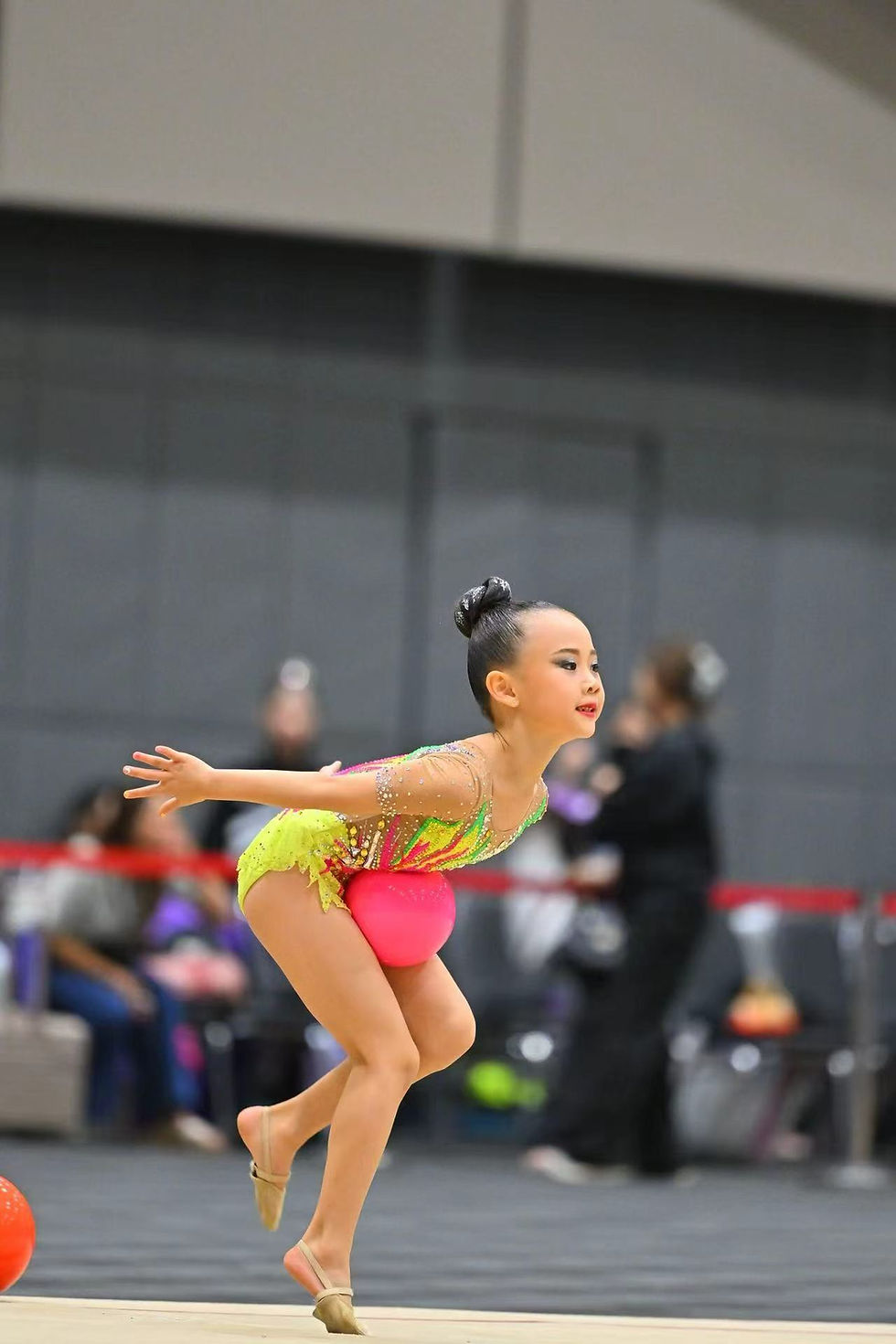
Behind every graceful performance lies years of developing strength, coordination, discipline, musicality, confidence, and resilience.
At AWA Singapore, we believe these foundations are what truly help children enjoy rhythmic gymnastics and reach their full potential—whether they pursue the sport recreationally or competitively.
Flexibility Is Only One Piece of the Puzzle
Flexibility is certainly an important component of rhythmic gymnastics.
It allows athletes to perform movements with elegance and efficiency.
However, flexibility alone cannot create a successful gymnast.
Without strength and body control, even the most flexible athlete cannot perform safely or consistently.
Elite gymnasts combine flexibility with:
Core strength
Balance
Coordination
Precision
Musicality
Body awareness
Mental focus
It is the combination of these qualities that creates world-class performances.
1. Strength Creates Beautiful Movement
One of the biggest misconceptions is that rhythmic gymnasts simply "stretch all day."
In reality, elite rhythmic gymnasts spend countless hours developing strength.
Strong muscles help athletes:
Maintain beautiful posture
Hold difficult balances
Execute controlled leaps
Support flexibility safely
Reduce injury risk
At AWA, children develop strength gradually through age-appropriate conditioning exercises, helping them build healthy movement habits from the beginning.
2. Coordination Is Just As Important
During a rhythmic gymnastics routine, athletes must coordinate:
Body movement
Apparatus handling
Musical timing
Spatial awareness
Facial expression
Everything happens simultaneously.
This level of coordination takes years to develop.
Through recreational rhythmic gymnastics, children naturally improve hand-eye coordination, body awareness, and movement control while having fun.
3. Balance Is Built Through Practice
Holding a beautiful balance isn't simply about flexibility.
It requires:
Strong core muscles
Stability
Concentration
Precise body alignment
Children develop balance gradually through structured exercises that improve both physical control and confidence.
These skills also support success in many other sports.
4. Discipline Shapes Long-Term Success
Elite athletes aren't successful because of talent alone.
They succeed because they develop positive daily habits.
Rhythmic gymnastics teaches children:
Consistency
Patience
Self-discipline
Responsibility
Time management
These qualities often become valuable life skills that extend far beyond sport.
5. Confidence Is Developed Through Progress
Every elite gymnast was once a beginner.
No one starts by performing difficult routines.
Confidence develops through small achievements.
Learning a new movement.
Holding a balance longer.
Improving posture.
Completing a routine.
Each success teaches children:
"I can improve through practice."
This confidence becomes one of the greatest gifts rhythmic gymnastics provides.
6. Musicality Makes Rhythmic Gymnastics Unique
Unlike many sports, rhythmic gymnastics combines athletic performance with artistic expression.
Children learn to:
Move with music
Understand rhythm
Express emotion
Perform confidently
Develop creativity
This artistic element helps children become expressive performers while enjoying movement.
7. Mental Strength Is Essential
Elite rhythmic gymnastics requires concentration under pressure.
Athletes learn to:
Stay calm
Recover from mistakes
Adapt quickly
Remain focused
Believe in themselves
Although most children participate recreationally, they also benefit from gradually developing these mental skills through regular practice.
8. Healthy Foundations Come Before Advanced Skills
One common mistake is believing children should learn difficult skills as quickly as possible.
Professional coaches understand that healthy development comes first.
At AWA, our programmes focus on building:
Correct posture
Body control
Core stability
Flexibility
Coordination
Confidence
Only after these foundations are established do more advanced skills become easier and safer to learn.
Elite Principles for Every Child
Children don't need Olympic ambitions to benefit from elite training principles.
The same foundations that support elite athletes also help recreational students develop:
Better posture
Improved coordination
Healthy movement habits
Greater confidence
Stronger discipline
At AWA, we adapt international coaching principles to suit children's age, ability, and goals.
Our focus isn't creating pressure.
It's creating opportunity.
Why Recreational Rhythmic Gymnastics Is the Perfect Beginning
Most children join rhythmic gymnastics because they want to:
Stay active
Make friends
Improve flexibility
Build confidence
Learn beautiful movement
Recreational programmes provide all these benefits while allowing children to develop naturally and enjoy the learning process.
At AWA, every child is encouraged to progress at their own pace without unnecessary competition pressure.
Why Families Choose AWA Singapore
Parents choose AWA Singapore because we believe true success isn't measured only by medals.
It's measured by the confidence children gain, the healthy habits they develop, and the joy they experience through movement.
Our programmes focus on:
International Coaching Philosophy
Professional coaching inspired by international rhythmic gymnastics development principles.
Strong Foundations
Building posture, flexibility, strength, coordination, and confidence before advanced skills.
Child-Centred Learning
Every child learns differently.
Our coaches support each student according to their individual pace and personality.
Holistic Development
Children develop:
Confidence
Discipline
Creativity
Focus
Healthy posture
Emotional resilience
These qualities support success both inside and outside the gym.
Frequently Asked Questions
Is flexibility the most important skill in rhythmic gymnastics?
No.
Flexibility is only one component. Elite rhythmic gymnastics also requires strength, coordination, balance, discipline, musicality, and confidence.
Does my child need to be naturally flexible?
Not at all.
Most children improve flexibility gradually through regular training and professional coaching.
Can recreational students benefit from elite coaching principles?
Absolutely.
Professional coaching methods help children build healthy foundations regardless of whether they plan to compete.
Is AWA focused on competition?
AWA primarily specialises in recreational rhythmic gymnastics, helping children enjoy movement while developing confidence, healthy habits, and strong physical foundations.
Every Champion Starts with Strong Foundations
The beauty of elite rhythmic gymnastics isn't created by flexibility alone.
It's built through thousands of small moments of practice, perseverance, encouragement, and personal growth.
At AWA Singapore, we believe every child deserves the opportunity to develop these same lifelong qualities—regardless of whether they ever step onto a competition floor.
Because the true value of rhythmic gymnastics isn't measured by medals.
It's measured by the confidence, discipline, resilience, and joy children carry with them for life.
Book a Trial Class at AWA Singapore
If you're looking for a professional rhythmic gymnastics academy in Singapore that focuses on healthy development, confidence, and internationally inspired coaching, we'd love to welcome your family.
Discover how rhythmic gymnastics can help your child build much more than flexibility.
AWA SingaporeWhere Discipline Meets Warmth.


Comments